
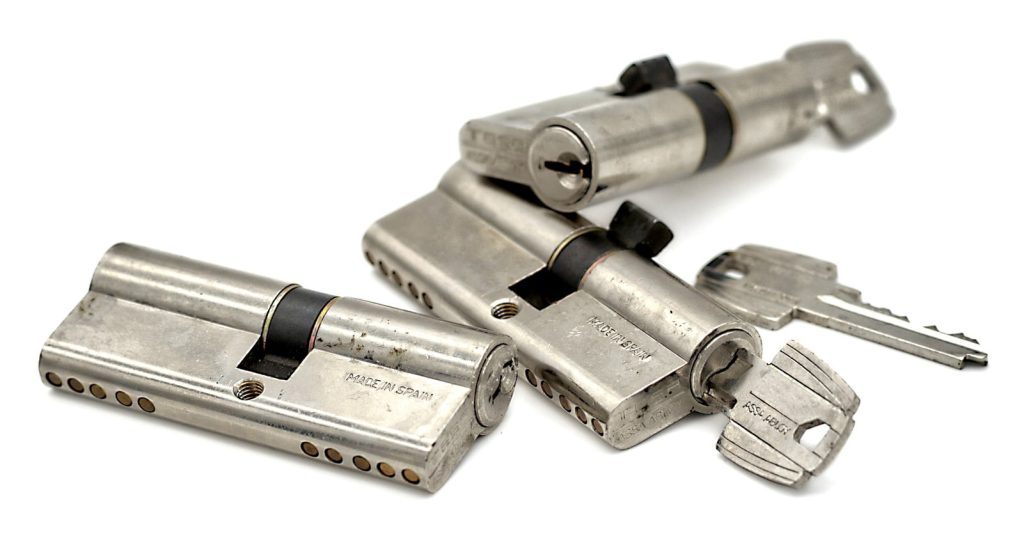
Learning how to change a uPVC door lock is a fairly simple process that can be done by someone who is confident in DIY. However, if you’re unsure of how to do this correctly, it is best to call a professional. Also, you do need the key in order to change a lock yourself, otherwise a locksmith is your best bet.
Here’s an easy step-by-step guide on how to change a Euro cylinder lock on a uPVC door:
Step 1: Gather your tools
The process can take between 10 to 30 minutes, depending on experience – and when learning how to change a Euro cylinder lock, you’ll need a few basic tools. The tools you need:
- A Screwdriver
- A tape measure
- A round file
- Penetrating oil or lubricant
Step 2: Locate the screw
When you’re ready to remove the existing lock, look for the Euro cylinder fixing screw, which is on the side of the door locking strip. The screw is the one that lines up with the bottom of the barrel cylinder.
Step 3: Remove the screw
Use your screwdriver to remove the fixing screw. If your lock is very old, you may need to use a lubricant to loosen it up first. Once the screw is free, keep it somewhere safe as often it’s easiest to use the old screw instead of the new one.
What if the fixing screw breaks?
This can sometimes happen with wear and tear. If the fixing screw breaks while you’re trying to remove it, you will need to drill into the screw and use a screw extractor to remove any broken pieces.
Step 4: Remove the cylinder
After the screw is removed, turn the key to about a quarter of a turn. This will line up the cam tongue (the moving part of the lock) with the body of the lock – and will help the barrel come out much easier. You may also want to loosen the screws on the handles if the cylinder is tight.
Step 5: Measure the lock barrel
Use a tape measure to measure the distance from the centre screw hole to the outside of the cylinder on one side. Repeat this process for the other side. The measurements will determine what size lock to order.
Step 6: Order a replacement
You can browse all brands of uPVC door cylinders on our website. If you get stuck, we can help you identify the right lock for your door, and can provide advice on how to change a Euro cylinder lock too.
Step 7: Fit the new lock
To fit a Euro cylinder lock, place the key in the lock and turn it about a quarter of a turn to line up the cam tongue and lock body. Insert the new cylinder into the open door. If the hole is too tight, do not force the lock. Instead, use a round file to file it down first. Then secure the fixing screw with a screwdriver.
Step 8: Oil all moving parts
Finish the job by adding lubricating oil to the lock mechanism. By oiling all moving parts, you can prevent damage from wear and tear, and ensure the door locks/unlocks effortlessly when in use.
Now you can test out your new Euro cylinder lock to ensure it is working properly.
We hope you find these steps on how to change a Euro cylinder lock useful.
For help choosing the right lock mechanism or spare parts for your door, use the enquiry form on our Contact page. You can upload images, which will help us identify the right make and model for the job. And whether you’re a trade or retail customer, our expert team is on hand to offer advice on how to change a uPVC door lock.
For more details, get in touch with our friendly team today.